The ‘Golden Thread’ in motion: Turning vision into action
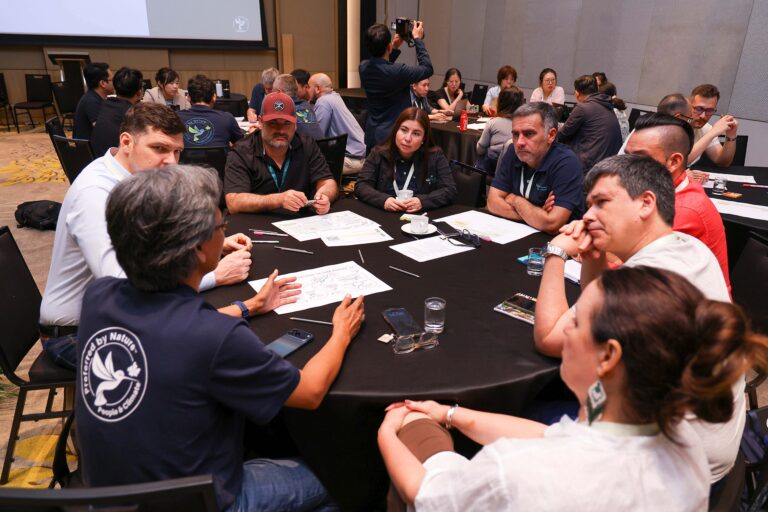
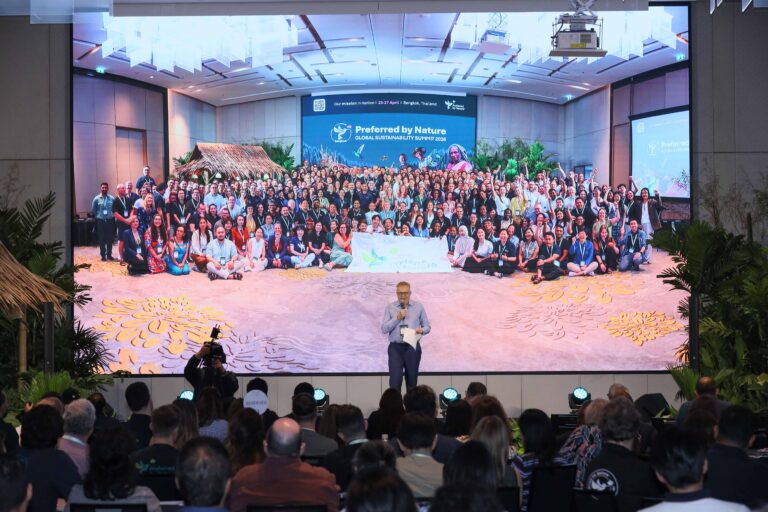
It begins in Bangkok, where the ‘human engine’ we convened has started its work. More than 350 experts have gathered, not just to talk about sustainability, but to reshape how it moves forward.
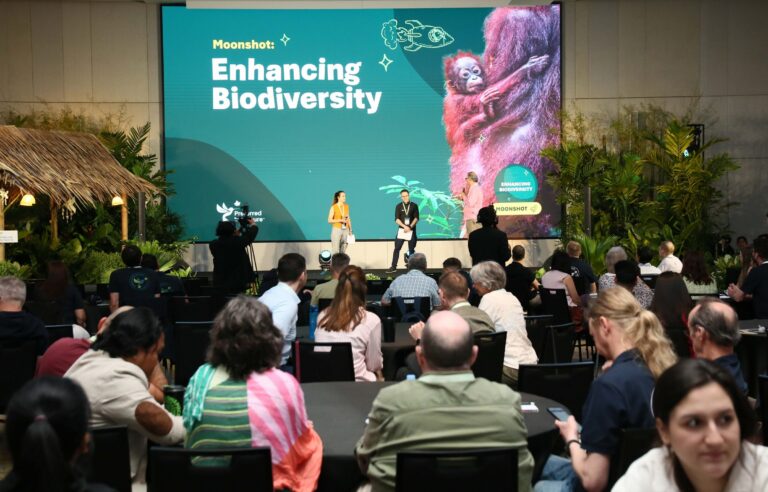
Day one of Preferred by Nature’s Global Sustainability Summit 2026 feels less like a conference and more like a convergence of minds. A space where the “Theory of Change” is not only a concept on a page, but something being actively woven through Moonshots, Accelerators, and the people behind them.
At the heart of this transition is an undeniable force: the human engine. As we step into this new phase, we recognise a world where the time for fragmented efforts has passed.
Economic power is evolving, consumption patterns are transforming, and technologies like AI redefined the technical reality of our work.
A shifting landscape of influence
For our Executive Director, Peter Feilberg, this moment demands a fundamental change in our approach.
“We are living in a time of rapid change. But it is more than that. It is disruption. Multiple disruptions happening at the same time. Geopolitics is shifting fast. Trade patterns are changing. New barriers, new alliances, new technologies, new risks.”
This vision expands our scale of influence, but scale alone is no longer enough.
Today, the conversation stretches further, toward climate adaptation, measurable biodiversity, and long-term resilience.
Crucially, this effort also stretches toward fairness. As established in our opening sessions, sustainability is a myth without the people.
This is where our Moonshots become the journey for change.
They reflect a commitment to building a people first organisation where systems empower rather than restrict.
What truly accelerates sustainability today?
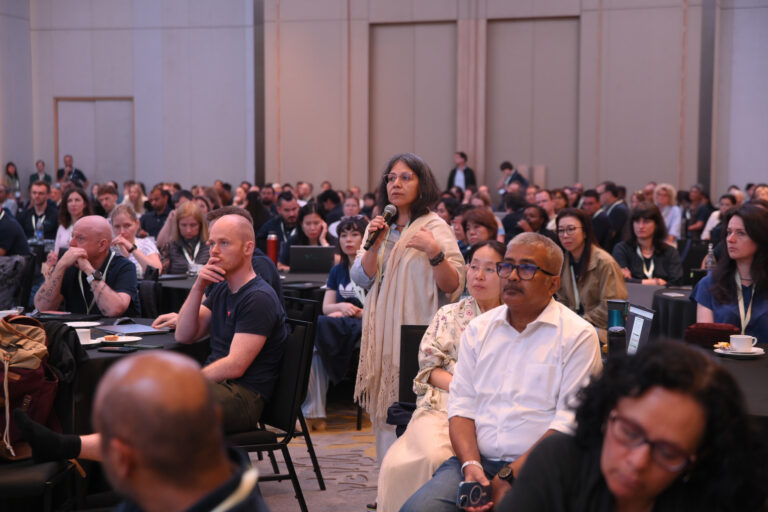
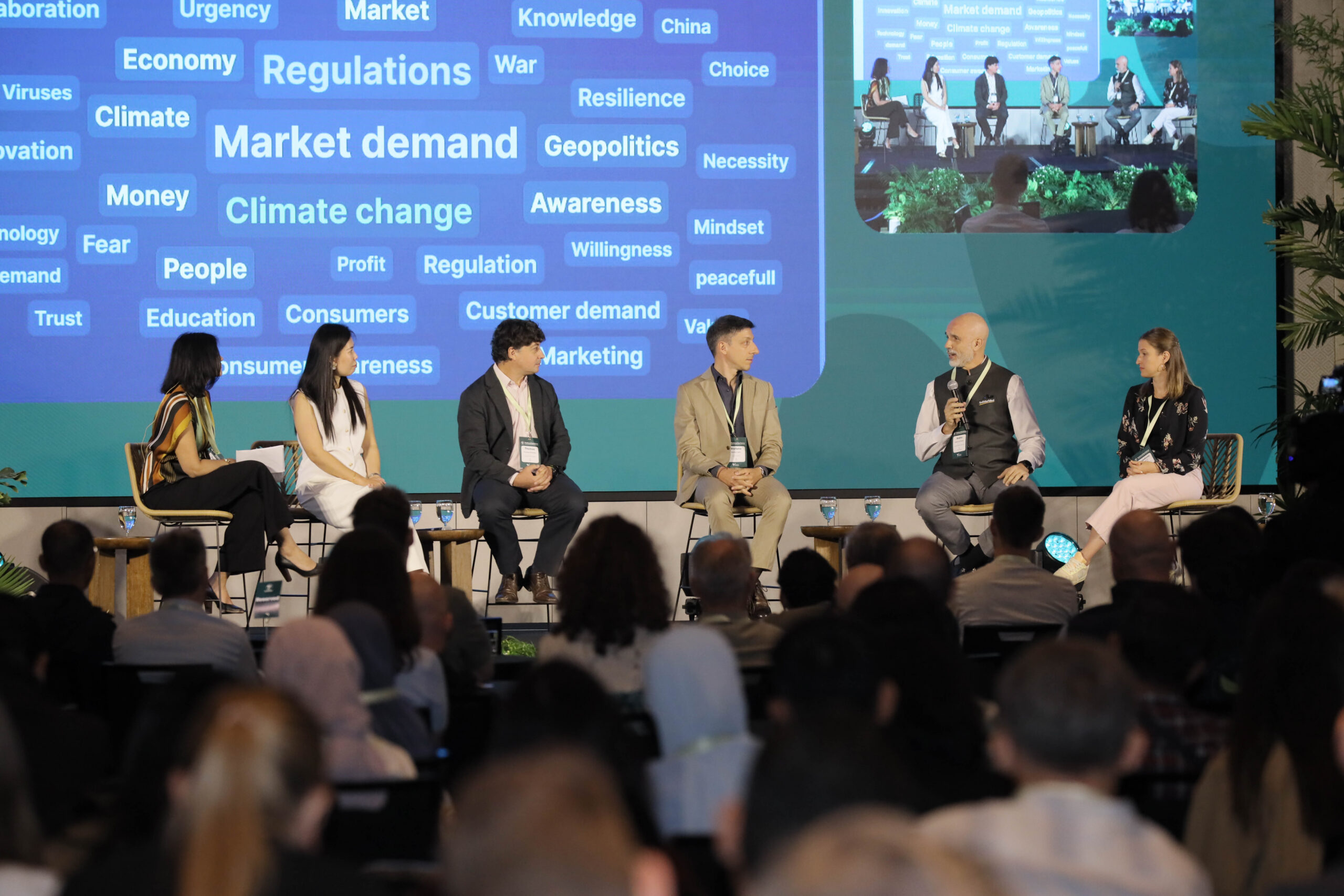
Throughout the day, one central question echoed across the plenary: What truly drives the systemic response we need? The answers were telling. Market demand and regulation emerged as the strongest drivers, yet another word surfaced repeatedly: fear.
Fear of risk; fear of future consequences; fear of being left behind.
However, as the panel discussion moderated by Sandra Razanamandranto, our Regional Engagement Director, unfolded, it became clear that fear cannot sustain momentum.
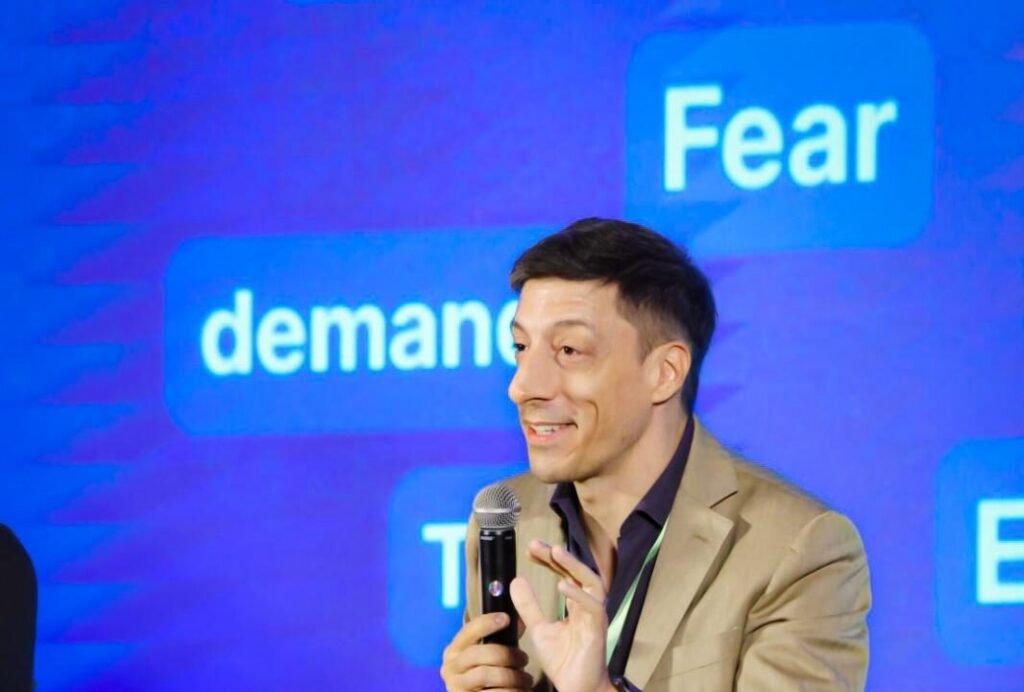
For Stefano Savi, Chief Executive Officer at Global Platform for Sustainable Rubber (GPSNR), urgency must be balanced with long-term thinking.
“Sustainability not as a niche, but as a core lens for risk, embedded in management and mitigation, with each step moving in the right direction,” explained Stefano.
This reality is particularly evident in high influence markets. Xinxin Zhang, our Regional Director for Asia Pacific, highlighted that for growth and sustainability to coexist, we must bridge high level objectives with ground realities. She noted that sustainability should not be viewed as a cost, but as the next great industrial leap for the region.
The bridge between science and implementation
From the ground level, the importance of tangible impact becomes even clearer. Andre de Freitas, Executive Director at Solidaridad, reminded us that exploring new tools and technologies is essential, especially when they can support the smallholders who act as the frontlines of environmental protection.
Collaboration, too, emerged as a recurring theme. For Thomas Colonna, Head of Asia Regional Office at European Forest Institute (EFI), no single entity can drive change alone. He emphasised that sustainability only works when different actors move together through stronger, inclusive alliances.
This sentiment was supported by Bénédicte Nicoleau, Sustainability Coordinator Rubber and GHG at Socfin, who stated that translating sustainability into real impact only happens through genuine partnerships rather than transactional relationships.
The first half of the day closed with a keynote from Dr Katherine Richardson, who brought the conversation back to the Planetary Boundaries framework. Sustainability is not just about intention; it is about design. It requires maximising resource efficiency, embracing circularity, and anticipating future bottlenecks before they emerge.
Long-term leadership and true competitiveness can only exist when policies align with the scientific limits of our planet.
As the room settles, one message lingers. This week is not about ideas alone; it is about choices. Direction must replace discussion.
The presence of Preferred by Nature Board Members such as Maiprae Loyen reinforces that this gathering is intentional. We are here to become part of the mechanism that drives change.
As Maiprae indicates, “Hope is something tangible built together, grounded in reality, and ready to be carried back to the people who need it most.”
If this movement is a machine, the engine is already running.
The shared spirit in the room is steady, determined, and ready to move.
With the ‘Why’ and ‘How’ of Day 1 established, our focus shifts toward the technical implementation of our shared goals. Look out for our next Insight article as we explore the practical roadmaps and regional highlights emerging from the heart of the Summit.